
|


|

|
|
 The Essence of Life®451 6th Avenue,
|
The Essence of Life®/GrainfieldsUSA 451 6th Avenue www.alkalinewaterworks4u.com
Park Slope Brooklyn, New York 11215 1-718-788-8783
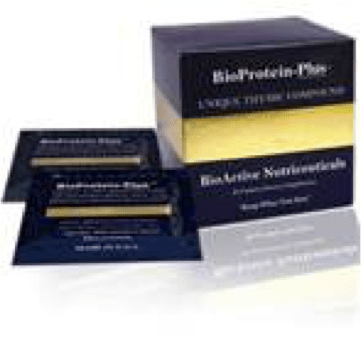
BioProtein+Plus Unique Thymic Compound “My Miracle in a box” Rebecca 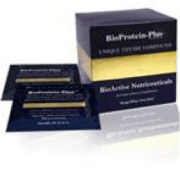
Immune Dysfunction:
Immune dysfunction affects about 65 million Americans and can manifest itself. “It stops my flu or colds overnight. This is the season for it” Rebecca.
in disorders such as chronic allergies, chronic fatigue syndrome, respiratory problems, arthritis, diabetes and chronic viral infections to name a only a few.
Thymus Proteins:
Volumes of scientific data including double blind clinical trials exist now to support the use of thymus proteins for immune suppression and immune dysfunction. Purified thymus proteins administered sub-lingual have proven to be the best of all thymus available.
BIOPROTEIN +PLUS:
BioProtein+PLUS contains biologically active purified thymic proteins ranging from 10,000 to 50,000 Daltons plus Zinc Gluconate freeze-dried in a base of Maltodextrin. BioProtein+Plus comes in boxes of 30 packets of powder each containing about 400 mg. of sub-lingual product.
Taken once per day, it has been used by our customers for Colds, Flu, Hepatitis C and other Viral Infections. Favorable results have been reported to us by customers using BioProtein+Plus to alleviate the side effects of Chemotherapy and Radiation treatment for cancer.
Grander® Treated for extra effectiveness
BioProtein+Plus is clinically proven to
increase CD4 cell counts without side
effects in patients with HIV receiving
antiretroviral treatment.
Distributed by
The Essence of Life®/GrainfieldsUSA 451 6th Avenue
Park Slope Brooklyn, New York 11215 1-718-788-8783
These statements have not been evaluated by the Food and Drug Administration. This product is not intended to diagnose, treat or cure any disease. Consult a medical professional when considering the use of any nutritional supplement.
BioProtein+Plus 718-788-8783
Should Dietary Fiber Be Considered an Essential Nutrient?
 © By Peter V. Radatti June 2012
Introduction by Rebecca Malter
www.radattifoods.com starchild23@verizon.net 1-718-788-8783
Nothing in this paper should be considered medical advice. For the treatment of any medical condition you must seek the advice of a trained medical doctor. This paper is not written with any specific products in focus but rather as a research of what is currently known about dietary fiber in general regarding nutrition. If you suffer or believe that you suffer from anything please consult your Doctor. Rebecca Malter
Dietary fiber is not well understood. There is a lot of wrong information in the public about dietary fiber but there are also many anecdotal studies that indicate that where a traditional diet of high fiber and natural foods are replaced with a modern diet of low fiber and processed foods that health deteriorates. Some studies indicate fiber may provide reduced risk of heart disease, type 2 diabetes, high blood pressure and breast and colon cancers.[1] Fiber can help you lose weight by replacing high calorie, high carbohydrate foods with no calorie, no carbohydrate fiber in addition to the fact that fiber may help block absorption of calories and provide indirect biochemical benefits to the human body, regulation of the digestion process and a sense of fullness.
Traditionally all dietary fiber is from plant sources and is broken into two main categories, water soluble and water insoluble. Water soluble fibers are also called gums. All plants contain both type of fiber in various degrees. The insoluble fibers are generally the structural parts of the plant while the soluble fibers are generally the wet part of the plant. They absorb water, slow down the emptying of the stomach and make you feel full. Soluble fibers can also help lower LDL (so-called bad) cholesterol by modifying absorption.[2] Insoluble fiber is considered gut-healthy fiber because it allows for easier fecal management by the body but is also digested by bacterial in the gut which produces important byproducts used by the body. Insoluble fiber is actually the largest amount of fiber we eat when eating raw, natural fruits, nuts and vegetables. Calling this fiber insoluble is not truly accurate because insoluble fiber can hold water.
A traditional whole foods diet consisting mostly of vegetables, nuts and fruits is rich in both soluble and insoluble fiber.
One of the reasons that fiber doesn’t get the respect that it should is because it is not understood. Many professionals think that fiber enters the body and exits the body mostly unchanged. That is far from the truth and in fact the effects of fiber on the body are profound. In my personal opinion dietary fiber should be considered an essential nutrient as critical to good health as Vitamin C.
Let’s review the assumption, that fiber enters and exits the body mostly unchanged. This has been proven to be false. First, fiber is digested by bacteria in the human gut. The amount of digestion is determined by many factors including the health of the subject and the type of fiber. For example, in a mixed diet fed to healthy individuals 70 to 80% of the fiber is digested during passage in the gut.[3] Cellulosic fiber survives digestion better than water soluble fibers. The significant fact is that dietary fiber is used in the body and not expelled. In healthy individuals only 17% of the solid matter in feces is fiber but 55% is bacteria and the remainder is undigested food, water, mineral salts and dead cells.[4]
The liver generates bile to aid in the digestion of fats in the digestive system. Bile is made from cholesterol which is why anything that increases the production of bile decreases bloodstream cholesterol. The body generally mistakes soluble fiber as fats for the purpose of bile generation, however since fiber is not a fat it is not digested by the bile. Bile is fat soluble so it binds other fat soluble toxins in the intestines. Unfortunately instead of the bile being expelled it is reabsorbed back into the blood. This changes when in the presence of insoluble fiber. The bile salts and its load of toxins bind to the insoluble fiber which is then expelled from the body.[5] This provides a triple benefit to the body. It lowers cholesterol by a natural process. It gently sponges toxins and expels them from the intestines. It acts as a stimulate for the liver and digestive processes by increasing the production of bile. Increasing the flow of bile may help to prevent the formation of bile stones.
Humans exist as a mix of human and other living organisms normally living in healthful harmony.[6] Many of these organisms are bacterial and a few fungi. Even some of the harmful bacteria are now thought to provide important benefits to humans when existing in harmony.[7] Beneficial microorganisms are called symbiotes. Exactly what symbiotes are needed for human health is unknown and largely unstudied.
Earlier I mentioned that bacteria use the fiber in the gut. One of the results of this bacteria digestion is the release of Inositol from phytic acid found in insoluble fiber. Inositol improves metabolism of cholesterol and helps depression, insomnia and fibromyalgia. In addition to Inositol these same bacteria create Vitamin K which helps the body manage bruising and blood clotting, Biotin (B7) and Vitamin K2. K vitamins help in the management of calcium and from the buildup of calcium in soft tissue. Since humans are unable to store much Vitamin K this source is important.[8] Without a diet rich in both types of fiber these bacteria have no food and produce no beneficial results.
This paragraph is quoted from Wikipedia. “When soluble fiber is fermented in the gut, short-chain fatty acids (SCFA) are produced. SCFAs are involved in numerous physiological processes promoting health. Some of these may be to help stabilize blood glucose levels by acting on pancreatic insulin release and liver control of glycogen breakdown, stimulate gene expression of glucose transporters in the intestinal mucosa, regulating glucose absorption, provide nourishment of colonocytes, particularly by the SCFA butyrate, suppress cholesterol synthesis by the liver and reduce blood levels of LDL cholesterol and triglycerides responsible for atherosclerosis, lower colonic pH (i.e., raises the acidity level in the colon) which protects the lining from formation of colonic polyps and increases absorption of dietary minerals stimulate production of T helper cells, antibodies, leukocytes, cytokines, and lymph mechanisms having crucial roles in immune protection, improve barrier properties of the colonic mucosal layer, inhibiting inflammatory and adhesion irritants contributing to immune functions. SCFAs that are absorbed by the colonic mucosa pass through the colonic wall into the portal circulation (supplying the liver), and the liver transports them into the general circulatory system. Overall, SCFAs affect major regulatory systems, such as blood glucose and lipid levels, the colonic environment, and intestinal immune functions. The major SCFAs in humans are butyrate, propionate, and acetate, where butyrate is the major energy source for colonocytes, propionate is destined for uptake by the liver, and acetate enters the peripheral circulation to be metabolized by peripheral tissues.”
The University of Kentucky published a paper on the health benefits of dietary fiber[9]. Among these benefits they found that people with a diet high in dietary fiber may be at significantly lower risk for developing coronary heart disease, stroke, hypertension, diabetes, obesity and some gastrointestinal diseases. Increasing dietary fiber lowered blood pressure and serum cholesterol levels, significantly increased weight loss in obese individuals and benefited the gastrointestinal disorders of gastro esophageal reflux disease, duodenal ulcer, diverticulitis, constipation, and hemorrhoids. They also found that increasing dietary fiber in the diet improves glycemia and insulin sensitivity in non-diabetic and diabetic individuals. Their paper also points out that prebiotic dietary fiber may enhance immune function and that the benefits of fiber may be similar for both children and adults. They recommend that dietary fiber intakes for children and adults are 14 g/1000 kcal and point out that more research is needed. While this is a useful figure for industrial food designers it is not very useful for someone attempting to eat a fiber rich diet from their refrigerator.
A more useful figure is provided by the United States National Academy of Sciences, Institute of Medicine who suggest that adults should consume 20–35 grams of dietary fiber per day, but the average American’s daily intake of dietary fiber is only 12–18 grams.[10]
The ADA recommends a minimum of 20–35 g/day for a healthy adult depending on calorie intake (e.g., a 2000 Cal/8400 kJ diet should include 25 g of fiber per day). The ADA’s recommendation for children is that intake should equal age in years plus 5 g/day (e.g., a 4 year old should consume 9 g/day). No guidelines have yet been established for the elderly or very ill.
The British Nutrition Foundation has recommended a minimum fiber intake of 18 g/day for healthy adults.
Table of suggested Dietary Fiber expressed in grams per day
Sex Mayo Clinic British ADA Nat. Acad. of Sci.
Age 50 & < Age 51& >
Men 38 g/day 30 g/day 18 g/day 20-35 g/day 20-35 g/day
Women 25 g/day 21 g/day 18 g/day 20-35 g/day 20-35 g/day
These figures are the suggested minimum values of grams per day of dietary fiber someone should eat to obtain benefits. Will there be more benefits with more fiber? Will eating too much fiber harm? There is very little information to answer these questions and therefor they are unanswered. My best guess is that eating more will not be harmful as long as it is kept within reason and is used in an acceptable form. It appears that the minimum amount of fiber to gain health benefits is somewhere between 18 and 38 grams of dietary fiber per day for healthy adults. For the sake of argument I will accept 35 grams per day for adults as the minimum daily intake of dietary fiber to provide benefits.
How much food do you have to eat to consume 35 grams per day of fiber? The Mayo Clinic has a guide to answer this question at http://www.mayoclinic.com/health/high-fiber-foods/NU00582. An extract of some of the more common foods are:
Quantity of Food Needed to Obtain 35 Grams/Day of Dietary Fiber
Mayo Clinic Supplied Value 35 grams / number of grams rounded up
Raspberries 1 cup is 8.0 grams You would need to eat 4.4 cups
Apple with skin 1 medium is 5.5 grams You would need to eat 6.36 apples
Orange 1 medium is 3.1 grams You would need to eat 11.29 oranges
Rye Bread 1 slice is 1.9 grams You would need to eat 18.42 slices of rye bread
Brown Rice, cooked is 3.5 grams/cup You would need to eat 10 cups of brown rice
Split peas cooked 1 cup is 16.3 grams You would need to eat 2.14 cups of split peas
Boiled Broccoli 1 cup is 5.1 grams You would need to eat 6.86 cups
Since fiber appears to hold significant value for health it should increase life expectancy. There is in fact a study completed by the US National Institute of Health and the American Association of Retired People (NIH-AARP) that I quote, “We found that dietary fiber intake was significantly inversely associated with risk of total death in both men and women.”[11] This means that eating more fiber may increase your life expectancy!
Is there anything wrong with dietary fiber? Unfortunately there is no free lunch. Everything has a benefit tradeoff and dietary fiber is no exception. Dietary fiber may slow down the transit time of prescription drugs causing unexpected serum levels of the drug. This has been observed with opioids but is easy to manage by a trained medical professional.[12] In addition mixing dietary fiber with opioids drugs may cause severe constipation or even an obstruction requiring medical intervention. Fiber may also bind to and expel some minerals which could be a problem for people with nutritional deficiencies but these are rare in developed nations. Finally, there is always the embarrassment of flatulence which is always present when bacteria are active in the gut. Since dietary fiber is food for the good bacteria there may be increased flatulence, however some people report a reduction in the amount of flatulence with continued use of dietary fiber.
There may be one other thing wrong with dietary fiber and that is the food industry has started to call some man-made chemicals and products of bacteria and yeast that would have never been called dietary fiber, “functional” fiber.[13] In addition the US Food and Drug Administration decided in 2007 that the chemical polydextrose can legally be called fiber. This chemical is already being used in children’s foods as fiber. The problem is that no one knows if these artificial dietary fibers have any of helpful properties of natural fiber but can legally claim to be fiber.[14]
One other consideration is that not all soluble fibers have the same actions. For example, Inulin from chicory root is considered a prebiotic which promotes symbiotic bacterial but doesn’t lower cholesterol. These problems can be resolved by using a blend of many different dietary fibers. In my opinion these appear to be good tradeoffs. Increased health in exchange for a little embarrassment!
Please seek assistance from a trained medical doctor prior to use if you have any medical condition. This paper is intended for educational purposes only.
[1] Prevention Fiber Up Slim Down Cookbook by Rodale, Page VII
[2] WebMD http://www.webmd.com/diet/fiber-health-benefits-11/insoluble-soluble-fiber
[3] The Effect of Dietary Fiber on Fecal Weight and Composition by John H. Cummings 0-8493-2387-8/01 (CRC 185)
[4] Dr. David Williams Alternatives May 2012, page 3 (J Med Microbiol 80;13(1):45-56)(FASEB J 91;5(13):2856-2859)
[5] Dr. David Williams Alternatives May 2012, Page 5
[6] http://en.wikipedia.org/wiki/Symbiosis
[7] Dr. David Williams Alternatives May 2012, page 2. In addition see recent studies of Helicobacter pylori in Science News October 9, 1999. http://www.sciencenews.org/sn_arc99/10_9_99/bob1.htm
[8] Dr. David Williams Alternatives May 2012, page 5
[9] Health benefits of dietary fiber. Anderson JW, Baird P, Davis RH Jr, Ferreri S, Knudtson M, Koraym A, Waters V, Williams CL. Source Department of Internal Medicine and Nutritional Sciences Program, University of Kentucky, Lexington, Kentucky. PMID: 19335713 [PubMed – indexed for MEDLINE]
[10] Linus Pauling Institute at Oregon State University, http://en.wikipedia.org/wiki/Dietary_fiber
[11] Dietary Fiber Intake and Mortality in the NIH-AARP Diet and Health Study, Yikyung Park, ScD; Amy F. Subar, PhD; Albert Hollenbeck, PhD; Arthur Schatzkin, MD Arch Intern Med. 2011;171(12):1061-1068. doi:10.1001/archinternmed.2011.18 http://archinte.jamanetwork.com/article.aspx?articleid=227566
[12] An MD will know how much time delay is needed between ingestion of drugs and dietary fiber, if any.
[13] Rodale Men’s Health November 2009 Page 102
[14] Rodale Men’s Health November 2009 Page 104
© By Peter V. Radatti June 2012
Radionics Miracles Two Day Class by Peter V. Radatti
Sunday November 20th and Sunday December 4th. For more information or to register call 1-718-788-8783
Learn How to Perform Miracles using Radionics! Level 1
The Universe is awash in psychic power. Some of the names for this ability used in the past are Miracles, Blessings, wishing upon a st ar and Magic.
It is natural and normal. Everyone and everything exists soaked in this power and everyone and everything has this natural ability.
Normal people have the ability. People with above normal ability we call psychics. There is no difference except in the level of ability.
Radionics amplifies and converts this ability, for everyone, into a simple to follow procedure. That is why the
This class is intended as a starting point for new Radionics students.
 There are things taught in this class that exist nowhere else that will make it useful even to experienced operators.
The class book introduces the Radionics Operating System (ROS) and the Radionics Operating System Program (ROSP).
The (ROS) is an ea sy way of performing radionics. ROSP is the operating system program that supports that way of thinking.
This concept turns the training of Radionics on it’s head. Instead of learning how to use the system and then taking years to get good at obtaining results you will operate at a grand master’s level from day one.
 Q. What are some of the things you can use Radionics for? A. Anything you can think of.
Many people use it for spiritual health, similar to Reiki but more effective! It can be used to help your business abundant
Make difficult decisions and influence fate
If you can think of it you can try it.
subtitle of this class is, “Miracles in the
palms of your hands”.
This Course
This was created to be an introduction to radionics. It is the first of 3 classes. 1. Beginners level 2. Middle level 3.Advanced Level
Once you are a paid registered student you will receive a free Radionics e- book. The e-book is written and copyrighted by Peter V. Radatti
The class include Organic non gmo lunch and non gluten no carb, non allergic prebiotic dessert.
Copyright Notice:
Copyright © August 2013 by Peter V. Radatti. Permission granted to copy for educational purposes provided that the copy is used by the recipient of the book and not sold nor distributed to anyone else. Your copy must be intact, whole and carry this copyright notice. This work is not in the public domain.
The class is limited to 12 participants only Deadline for Registration is December 10th
To register and for more information call 1-718-788-8783 or 347-236-6334


 starchild23blog